Roasty: Where Medieval Strength Meets Modern Edge
A Typeface with a Bold Visual Statement
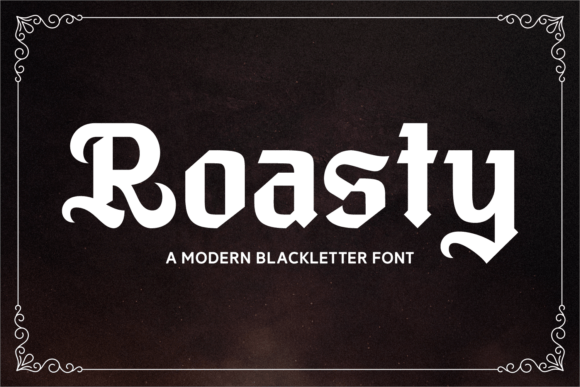
When you encounter Roasty, you’re not just looking at another blackletter font. This typeface carries the weight of medieval Old English tradition but sharpens it for contemporary use. Each letter is thick, deliberate, and well-defined—built to command attention without relying on gimmicks. It’s the kind of font that feels both historic and immediate, making it a versatile tool for designers who want to inject strength and character into their work.
What sets Roasty apart is its balance. The strokes are bold enough to hold their own at large sizes, yet the letterforms retain a clarity that avoids the dense, hard-to-read tendencies some blackletter styles fall into. This makes it particularly useful for projects where you need a font to serve as a visual anchor—think logos, headlines, or branding elements that require a strong, recognizable presence.
Where Roasty Truly Shines
Roasty isn’t a font for body text or delicate paragraphs. It’s a display font, designed for impact. Consider using it for:
- Logo design and brand identity—especially for brands in craft beer, artisanal goods, vintage-inspired products, or creative studios wanting to convey authenticity and edge.
- Editorial and packaging design—where headlines need to pop on magazine covers, book jackets, or product labels.
- Digital and social media graphics—for YouTube thumbnails, Instagram posts, or website banners that need to stand out in a fast-scrolling environment.
- Tattoo artistry and apparel graphics—its bold lines translate well to ink and fabric, offering a timeless yet fresh aesthetic.
For entrepreneurs and small business owners, Roasty can become a key part of your visual toolkit. If your brand story involves heritage, craftsmanship, or a rebellious spirit, this typeface helps communicate that instantly. It’s not about following trends—it’s about choosing a font with a distinct personality that aligns with your message.
Evaluating Fit and Readability
Before committing to Roasty, ask yourself: Does my project need a creative font that makes a bold statement? If you’re designing a logo for a tattoo parlor, a craft brewery, or an indie music label, Roasty could be perfect. But if you’re working on a legal document or a health-care brochure, it’s likely too stylized. Always test the font in context—mock up a headline, see how it looks on a screen versus printed, and check readability at different sizes.
Pairing with Other Fonts
Roasty works best when paired with simpler, more neutral typefaces. A clean sans serif font or a straightforward serif font for body text creates a nice contrast, letting Roasty’s headline do the heavy lifting. Avoid pairing it with other ornate script fonts or handwritten fonts—that can feel cluttered. Think of Roasty as the main voice, with supporting fonts providing balance.
Understanding Licensing and Styles
As a premium font, Roasty typically comes with a commercial license, which is essential if you’re using it for client work, merchandise, or business branding. Check what’s included—does it offer multiple weights, alternates, or stylistic sets? These details can expand your creative options. Also, consider how the font will be embedded in digital projects; web fonts require specific formats, so ensure your license covers that use if needed.
Real-World Applications and Observations
I’ve seen Roasty used effectively in a few standout ways. One craft distillery used it for their bottle labels—paired with a minimalist sans serif for tasting notes, the result felt both premium and rooted in tradition. Another example was a music festival poster where Roasty served as the event title, instantly conveying energy and authenticity. In both cases, the font didn’t just decorate—it communicated something essential about the brand’s identity.
For content creators and bloggers, consider using Roasty for your channel name, podcast cover, or ebook title. It adds a layer of professionalism and distinctiveness that generic fonts lack. Just remember: with a font this strong, less is often more. Use it sparingly for maximum effect—let it be the accent that elevates your design, not the element that overwhelms it.
A Note on Modern Typography Trends
In today’s design landscape, there’s a growing appreciation for typefaces that blend historical references with contemporary execution. Roasty fits that niche perfectly. It doesn’t feel like a relic; it feels like a reinterpretation. That makes it relevant for projects that want to nod to the past while staying firmly in the present. Whether you’re designing for a brand identity, creating social media graphics, or developing packaging design, choosing a font like Roasty shows intentionality—it tells your audience you’ve thought about every visual detail.
Ultimately, Roasty is more than just a blackletter typeface. It’s a design asset for creators who value strength, tradition, and a touch of modern flair. If your project calls for a bold visual statement, it’s worth exploring how this font can help you achieve it—with clarity, character, and confidence.