Saifha: The Handwritten Font That Feels Like a Friendly Wave
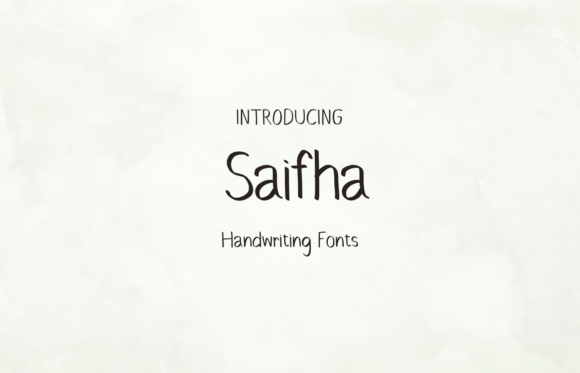
There’s a particular kind of warmth that a truly well-crafted handwritten font can bring to a design. It’s not just about mimicking a pen; it’s about capturing a mood. That’s exactly what the Saifha font achieves. This isn't a stiff, formal typeface. Saifha is a sweet, friendly, and undeniably fun display font that injects an instant dose of personality into any project it touches. Think of it as the design equivalent of a cheerful greeting or a playful doodle in the margin of a notebook.
At its core, Saifha is a display font, meaning its primary purpose is to grab attention in headlines, titles, and short bursts of text rather than for setting long paragraphs of body copy. Its visual characteristics are defined by a casual, flowing rhythm. The letterforms are soft, with rounded edges and a gentle, inconsistent baseline that mimics natural handwriting. This slight irregularity is its charm—it feels human, approachable, and authentic. The overall style leans more towards a script font than a block print, but it maintains excellent legibility even at smaller sizes, a crucial trait for any creative font aiming for versatility.
Where Saifha Truly Shines: Real-World Applications
The magic of Saifha is its chameleon-like ability to adapt to a wide array of contexts while maintaining its core friendly identity. Its strengths lie in projects where you want to communicate warmth, approachability, and a touch of whimsy.
For small business owners and entrepreneurs, Saifha is a fantastic asset for brand identity, especially for brands that want to feel personal and relatable. Imagine it used for a boutique bakery’s logo, the header of a handcrafted jewelry store’s website, or the thank-you cards tucked into online orders. It works beautifully in packaging design for artisanal products, on social media graphics announcing a sale, or in the title slides of a presentation to set a welcoming tone.
In the world of digital design and web design, Saifha can be the perfect accent font. Use it for pull quotes, call-to-action buttons, or section headings on a blog to break up the monotony of standard sans serif font or serif font text. It’s particularly effective for lifestyle blogs, parenting sites, or any online space aiming for a community-oriented feel. For content creators and marketers, it can make email subject lines pop and give social media posts a more personal, handwritten note feel.
Beyond digital, its applications in print and personal projects are equally compelling. It’s a natural fit for wedding invitation suites, save-the-dates, and thank-you cards, offering a sweet alternative to more formal script font styles. Teachers and students will find it invaluable for creating engaging classroom materials, fun worksheets, or poster boards. For hobbyists and crafters, it’s ideal for designing custom t-shirts (“love shirt” designs), scrapbooking elements, or party decorations. Even in editorial design, it can add a playful touch to magazine headlines or chapter titles in a book.
Making Saifha Work for You: Practical Considerations
Choosing a font like Saifha is the first step. Using it effectively is the next. Here’s how to integrate it into your workflow for maximum impact.
Evaluate the Fit: Saifha’s personality is upbeat and informal. Before committing, ask if that aligns with your project’s voice. It’s perfect for a children’s brand, a friendly community project, or a playful product. It might be less suitable for a law firm’s annual report or a luxury watch brand where traditional elegance is key. Its charm is specific, and that’s a strength.
Mastering Font Pairing: This is where Saifha’s utility really expands. As a display font, it pairs best with a cleaner, more neutral font for body text to ensure readability and create a clear visual hierarchy. A simple sans serif font like Montserrat or Lato creates a modern, balanced look. A traditional serif font like Georgia or Merriweather can offer an interesting contrast, grounding Saifha’s whimsy. The key is to let Saifha be the star in headlines while its partner font does the heavy lifting for paragraphs.
Check the Package: When you acquire Saifha as a premium font, explore what’s included. Does it offer multiple weights (like Regular and Bold)? Does it have stylistic alternates or ligatures that can add variety to your lettering? Understanding the full range of the typeface gives you more tools to work with. Also, be clear on the commercial font license—ensure it covers your intended use, whether for client work, merchandise, or digital products.
Readability is Key: While Saifha is more legible than many handwritten fonts, it’s still a display face. Avoid setting large blocks of text with it. For web design, test it across different devices and screen sizes. In print, check its clarity at the size you intend to use. A font can have all the personality in the world, but if it hinders communication, it’s not doing its job.
Think of Saifha not as a replacement for your core brand identity fonts, but as a powerful accent in your design assets toolkit. Used strategically, it can elevate a project from feeling generic to feeling genuinely personal, helping you connect with your audience on a more human level. In a digital landscape often dominated by stark, impersonal typography, a font like Saifha is a reminder that design can, and often should, feel friendly.