Rediscover Classical Sophistication with Parat
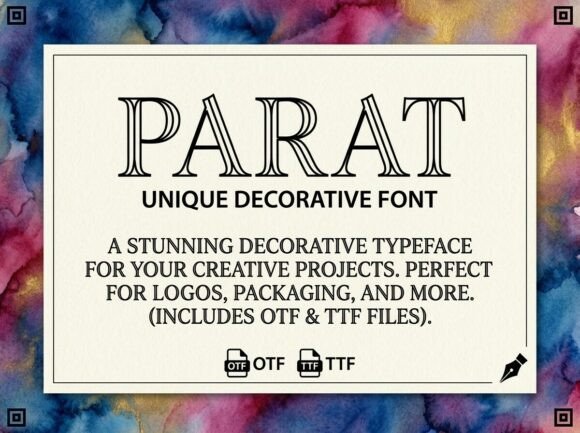
When you first see Parat, you might think of the engraved details on a vintage banknote or the fluted grooves of a marble column. It is a display serif that doesn’t just sit on the page; it commands attention through intricate, structural beauty. In a digital landscape often dominated by geometric sans-serifs and sterile minimalism, Parat offers a return to craftsmanship. It is a typeface designed for those who want their typography to speak of quality, heritage, and deliberate elegance. For designers and brand strategists, this is not just another font—it is a statement piece that anchors a visual identity in a sense of permanence.
The Anatomy of a Noble Typeface
What makes Parat distinct is its "noble-and-nuanced" soul, achieved through a specific design mechanic: a rhythmic, triple-line inline detail. Unlike standard serif fonts that rely solely on thick and thin strokes to create contrast, Parat introduces a parallel path along the spine of every letterform. This architectural approach creates a visual texture that feels three-dimensional and tactile. The high-contrast letterforms are balanced by a structural weight that prevents the intricate details from becoming illegible at large scales.
This design draws heavily from classical aesthetics but applies them with modern precision. The result is a typeface that feels both historic and contemporary. It avoids the rigidity of stencil fonts while maintaining the clarity of high-impact signage. Whether you are viewing it in a digital header or on a physical label, the letterforms possess a sculptural quality, making the text feel less like typed words and more like carved artifacts.
Strategic Applications for Maximum Impact
Because of its detailed nature, Parat is a quintessential display font. It is optimized for headlines, hero sections, and branding elements where size allows its details to shine. Trying to use this typeface for long-form body copy would undermine its strengths; instead, it should be reserved for the moments where you need to make an immediate impression of luxury and timelessness.
Here is where Parat truly elevates a project:
- Luxury Hospitality Branding: Independent boutique hotels and high-end resorts can use Parat to evoke a sense of classic prestige. It suggests that the establishment values tradition and attention to detail, much like the architecture of the buildings themselves.
- Artisanal Spirits Packaging: The font’s resemblance to currency engraving makes it perfect for the spirits industry. On a bottle of craft gin or aged whiskey, Parat communicates authenticity and the slow, careful process of distillation.
- Museum and Editorial Design: For exhibition titles or magazine covers, this typeface provides the necessary gravitas. It frames the content within a context of importance and cultural value, suitable for art, history, and high-fashion editorials.
- Social Media Headers: In the fast-scrolling environment of Instagram or LinkedIn, a "stately-and-sculpted" header using Parat stops the thumb. It breaks the visual noise of standard web fonts, signaling to the viewer that the content inside is premium.
Building a Brand Identity with Parat
Choosing a premium font like Parat is a strategic move in brand identity. Typography is often the first subconscious signal a customer receives about your brand's personality. A rounded sans-serif suggests friendliness and approachability, whereas the high-contrast, engraved nature of Parat suggests exclusivity and authority. If your brand strategy revolves around being "best-in-class" or "heritage-driven," this typeface aligns those values visually.
However, using a display font with such a strong personality requires a thoughtful approach to visual hierarchy. You cannot simply swap it in for your current headers without considering the supporting cast. Parat demands space. When used in logo design, it works best when the tracking (letter spacing) is slightly opened up, allowing the triple-line details to breathe. In web design, it should be used sparingly—perhaps for the main H1 tag or pull quotes—to maintain readability and keep the loading performance optimal.
Mastering Font Pairings and Readability
The success of Parat in a layout often depends on what you pair it with. Because Parat is ornamental and heavy in detail, it pairs exceptionally well with clean, neutral companions. You need a contrast in texture to prevent the design from becoming overwhelming.
The Classic Companion: Pair Parat with a clean sans serif font for body text. Fonts with geometric or grotesque characteristics provide a modern counterpoint to Parat’s classical roots. This combination is ideal for editorial design and packaging design, where the headline grabs attention, and the sans-serif provides the necessary legibility for product information or article text.
The Modern Mix: For a more contemporary feel, consider pairing Parat with a minimalist modern typography choice. A thin, wide sans-serif can bridge the gap between the ornate display font and the digital interface, making the brand feel both established and relevant.
Readability Considerations: As a creative font, Parat is designed for impact, not for scanning paragraphs. When testing the font, check its legibility at the specific sizes you intend to use. The intricate inline details are a feature, but at very small sizes on low-resolution screens, they might merge. Always test your font pairing on mobile devices to ensure the "prestigious personality" of the headline doesn't clash with the mobile interface.
Practical Guidance for Implementation
Before integrating Parat into your next project, take a moment to evaluate the licensing and technical specs. As a commercial font, ensure your license covers the specific use cases you need—whether that is for social media graphics, physical merchandise, or web design. High-quality typefaces often come with different tiers of licensing, so verify that your usage rights match your distribution channels.
Furthermore, explore the included styles. A robust typeface family will often offer different weights or stylistic alternates. While the triple-line detail is the hero feature, check if there are variations that simplify the detail for smaller sizes, or ligatures that improve the flow between specific letter combinations. Utilizing these built-in design assets ensures that your typography looks polished and intentional.
Ultimately, Parat is more than just a collection of vectors; it is a tool for storytelling. By leveraging its classical sophistication, you can transform a standard layout into something that feels curated and enduring. Whether you are a small business owner refining your packaging or a designer building a mood board for a high-end client, this font offers a bridge between the past and the present, wrapped in a distinctly noble aesthetic.