Isaac: The Modern Geometric Typeface with Crystal Clarity
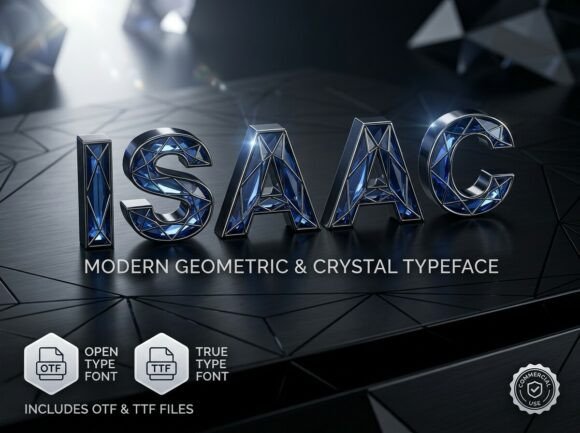
In the search for a typeface that communicates both precision and luxury, many designers find themselves caught between clean, minimalist sans serifs and ornate, decorative display fonts. Isaac strikes a compelling balance. It’s a premium display font that borrows the structured confidence of geometric design and infuses it with the captivating depth of faceted gemstones. Think of the sharp, silver outlines of a modern blueprint filled with the deep, light-refracting interior of a sapphire. This isn’t just a set of letters; it’s a design asset built for impact.
The Visual Language of Isaac
At its core, Isaac is a study in contrast and dimension. The foundation is geometric—clean lines, consistent angles, and a sense of mathematical harmony. This gives it an inherent modernity and a feeling of reliability. But what elevates it beyond a standard geometric sans serif is the treatment of its interior. The deep, crystalline fill suggests volume and weight, as if each character is a small, polished object. The subtle 3D effect isn’t about shadow or heavy drop effects; it’s about the illusion of light catching on sharp edges and transparent planes. This creates a visual personality that is simultaneously technical and luxurious, futuristic yet timeless.
Where This Typeface Truly Shines
The strength of a font like Isaac lies in its specific applications. It’s not designed for body copy in a novel, but it excels as a centerpiece for projects that need to convey value, innovation, and sophistication.
- Luxury Branding & Logo Design: For brands in jewelry, high-end cosmetics, premium tech, or exclusive services, Isaac provides an immediate visual shorthand for quality. Its sharp geometry feels cutting-edge, while the crystal effect speaks to rarity and refinement. A logo set in Isaac feels crafted, not just typed.
- Editorial & Magazine Design: Use it for striking headlines, chapter titles, or pull quotes in publications focused on architecture, design, or lifestyle. It adds a layer of visual interest that can define the entire aesthetic of a spread.
- Web & Digital Design: In the digital space, attention is currency. Isaac can make a hero section, a call-to-action button, or a product title pop on screen. Its depth works well against both dark and light backgrounds, offering flexibility for various UI themes.
- Packaging Design: On a shelf or in an online store, packaging has to tell a story instantly. Isaac is perfect for product names on boxes for electronics, specialty cosmetics, or artisanal goods where the packaging itself is part of the premium experience.
- Social Media & Marketing Graphics: For a campaign that needs to stop the scroll, this typeface brings inherent drama. It can make a sale announcement, a new product launch, or an event title feel significant and worthy of a second look.
Practical Guidance for Using Isaac
Adopting any display font requires a thoughtful approach to ensure it enhances rather than overwhelms your project. Here’s how to integrate Isaac effectively.
Evaluating Project Fit and Font Pairings
Before choosing Isaac, ask what the primary goal of your typography is. If the aim is to establish a bold, memorable headline or logo mark, it’s an excellent candidate. If you need extended readability for paragraphs, you’ll want to pair it with a more neutral typeface. The best font pairing for Isaac often involves a clean, simple sans serif font for body text. Think of a typeface like Inter, Poppins, or Helvetica Neue. The simplicity of the companion font will ground the design and ensure your body copy remains easy to read, allowing Isaac to command attention where it’s needed most. A classic serif font could also work for a more editorial, high-contrast feel, but test it carefully to avoid visual competition.
Understanding Styles and Licensing
A premium font family often includes more than one weight or style. Check what comes with your Isaac license. Does it include bold, light, or italic variations? Multiple styles within the same typeface family give you more tools to create visual hierarchy—using a bolder weight for a main title and a lighter weight for a subtitle, for instance. This maintains stylistic consistency while providing functional flexibility.
Equally important is understanding the commercial font license. For designers and business owners, knowing whether the license covers your intended use—be it a client’s logo, a product for sale, or a website—is crucial for professional and legal peace of mind. Reputable foundries and marketplaces will make this information clear.
Readability in Context
Readability is always relative. While Isaac is not for long-form text, it must be legible at its intended scale—typically large, for headlines. Test it in your actual design context. At the size it will be used, are the letters distinct? Does the geometric clarity hold up? Its effectiveness is in its visual hierarchy role: it draws the eye first, creating a clear entry point into your design, after which a more readable font takes over the narrative.
Building a Cohesive Brand Identity
For entrepreneurs and small business owners building a brand identity, typography is a core pillar. Using a distinctive typeface like Isaac for your primary logo or key marketing materials can foster strong brand recognition. When customers see that specific, crystalline geometry associated with your brand repeatedly, it builds a visual memory. The key to brand consistency is disciplined use. Define where Isaac appears—perhaps only on logos and major campaign headlines—and pair it consistently with your chosen body font and color palette across your website, social media, and print materials.
Ultimately, Isaac is more than just a creative font; it’s a statement piece. It’s for the project that wants to look forward without sacrificing elegance, for the brand that sees itself as both precise and precious. Used with intention, it doesn’t just display words—it refracts your message into something brilliant.