Culex: Wire Your Designs for Success with Cybernetic Impact
There is a specific kind of energy found in the glow of a motherboard or the grain of a retro sci-fi film. It feels electric, technical, and undeniably cool. If you have ever tried to design a brand identity for an independent e-sports team, a tech startup, or a retro gaming interface, you know how difficult it is to capture that "cybernetic-and-cinematic" vibe using standard fonts. This is where Culex enters the circuit. It is not just another typeface; it is a high-voltage display font designed to bridge the gap between 1980s motherboard aesthetics and modern futuristic branding.
The Anatomy of a High-Voltage Typeface
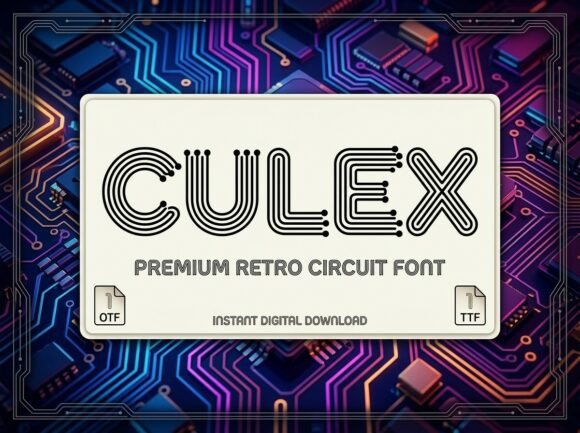
When you look at Culex, the first thing you notice is the weight. These are heavy, geometric letterforms that command attention on any screen or print medium. However, what sets this typeface apart from a standard sans serif font are the details. The designers have incorporated rhythmic, hand-drawn multiline "traces" that run through the characters, mimicking the pathways of an integrated circuit. You will also find circular nodes positioned at strategic junctures, adding a layer of technical authenticity.
This combination of bold structure and intricate detailing gives Culex a unique personality. It feels industrial yet organic, thanks to the hand-drawn elements. It avoids looking sterile or robotic, which is a common pitfall in futuristic typography. Instead, it offers a gritty, tactile experience that feels like it was built by a human hand but engineered for the digital age. It is the visual equivalent of hearing a synthesizer hum to life.
Strategic Applications: From Branding to Social Media
Choosing the right display font is about context. You wouldn't use a delicate script font for a cybersecurity firm, just as you wouldn't use a stiff corporate font for a creative agency. Culex excels in environments where you need to project strength, innovation, and a bit of edge.
E-Sports and Gaming For independent e-sports teams, logo design is about intimidation and recognition. Culex provides the heavy structural weight needed to look powerful on a jersey or a stream overlay. Its technical personality aligns perfectly with the gaming world, making it an ideal choice for team names, tournament headers, and interface design for retro-modern games.
Tech Startups and SaaS In the crowded world of tech, standing out is difficult. Many startups default to clean, geometric sans-serifs that can feel generic. By using Culex for your headlines or logo, you signal that your brand is rooted in engineering and code. It suggests a "backend" power that appeals to developers and tech-savvy consumers alike.
Social Media and Content Creation We live in an era of scrolling. To stop a thumb, you need high-impact visuals. Culex is perfect for "encoded-and-electric" social media headers and thumbnails. Because of its heavy weight, it remains legible even at smaller sizes on mobile devices, making it a versatile tool for content creators and bloggers looking to add a modern edge to their digital presence.
Mastering the Pairing and Hierarchy
Using a premium font like Culex requires a bit of finesse. Because it is a display font with high visual complexity, it dominates a layout. You cannot use it for long paragraphs of body copy; the multiline traces would make extended reading tiring on the eyes.
Instead, use Culex to establish visual hierarchy. Let it handle the H1s, H2s, and pull quotes. For your body text, pair it with a neutral, highly readable typeface. A clean sans serif font works well to maintain the modern, technical vibe, while a classic serif font can create an interesting contrast if you want a slightly more editorial feel. The key is balance. Let Culex be the loudspeaker and your body text be the whisper.
Evaluating Fit and Commercial Use
Before integrating any new design assets into your workflow, practical evaluation is necessary. Here is how to determine if Culex is the right commercial font for your project:
- Check the Glyph Set: Does the font support the specific characters or languages you need? For a premium font, you should expect a comprehensive character map.
- Test the Pairings: Don't just look at the specimen sheet. Mock it up. Place the font next to your existing brand assets. Does the "cybernetic" style clash with your photography, or does it complement it?
- Licensing: Ensure the license covers your intended use. If you are a freelancer creating a logo for a client, you need to verify if the license transfers or if the client needs to purchase their own copy. This is crucial for professional brand identity work.
Ultimately, Culex is a specialized tool. It is not a replacement for your everyday web design