Command the Field with Luke, a Vintage-Inspired Varsity Font
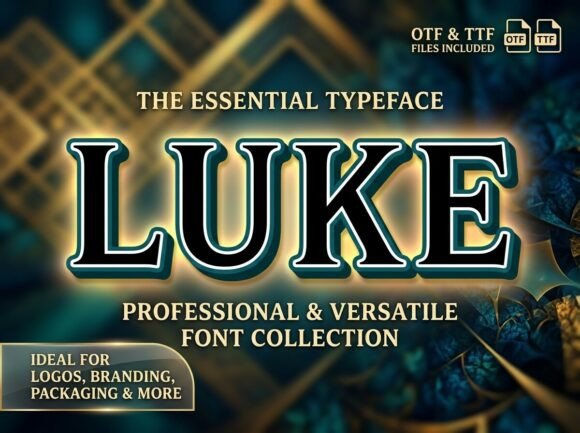
There's a certain weight to classic athletic lettering. It carries the echo of roaring crowds, the smell of freshly cut grass, and the pride of a team name stitched across a chest. Luke, a vintage-inspired varsity font, taps directly into that legacy. It’s not just a collection of characters; it’s a design asset built on sturdy block structures and refined with a sophisticated dual-tone gradient. This isn't your typical, overly distressed retro typeface. Luke offers a modern polish, making it a premium font choice for anyone looking to inject their projects with a sense of established tradition and confident energy.
At its core, Luke is a display font designed for impact. Its letterforms are bold and assertive, with a balanced weight that ensures legibility even at smaller sizes. The subtle gradient effect—a hallmark of its design—adds depth and dimension, allowing it to stand out on both digital screens and printed materials. This characteristic makes it particularly effective for logo design, where a mark needs to be instantly recognizable and carry a brand's personality in a single glance. The font's personality is one of confident authority mixed with accessible charm, making it versatile enough for serious collegiate branding or the playful nostalgia of a retro streetwear line.
Where Luke Truly Excels: Practical Applications
Understanding a font's strengths is key to using it effectively. Luke isn't a workhorse body text; it's a specialist, and knowing where to deploy it is half the battle.
- Sports & Collegiate Branding: This is Luke's home turf. It’s ideal for university logos, team mascots, championship tournament posters, and athletic apparel. The font communicates strength, heritage, and a winning spirit. Use it for headlines on sports blogs, event banners, or merchandise mockups to instantly establish a credible, team-oriented brand identity.
- Retro & Streetwear Design: The vintage aesthetic is a powerful trend in fashion and packaging design. Luke works beautifully for clothing tags, hang tags, and logo lockups for streetwear brands. Pair it with a simple sans serif for product descriptions to let the headline font do the heavy lifting. Its polished finish avoids looking cheap or overly nostalgic, striking the right balance for contemporary street style.
- Editorial & Publishing: In editorial design, a strong headline can make or break a layout. Luke is perfect for magazine covers, chapter titles, or pull quotes in publications focused on sports, lifestyle, or history. Its clear hierarchy guides the reader's eye, making it a practical tool for content creators and publishers aiming for a professional, engaging layout.
- Digital & Social Media: For web design, Luke can be used for hero section headlines, call-to-action buttons, or feature section titles to create immediate visual interest. On social media, it’s a standout for Instagram story graphics, YouTube thumbnails, and Facebook ad headlines. Its strong presence helps graphics cut through the noise of a crowded feed, improving engagement for marketers and bloggers.
Making Luke Work for You: A Designer's Guidance
Choosing the right font is a strategic decision. Here’s how to approach Luke to ensure it enhances, rather than overwhelms, your project.
Evaluating Fit and Font Pairing
Before you commit, ask: does my project need to communicate tradition, strength, or collegiate pride? If the answer is yes, Luke is a strong candidate. However, its distinct personality means it requires careful font pairing. Avoid pairing it with other highly decorative or script fonts, which can create visual chaos. Instead, opt for clean, neutral companions. A simple, geometric sans serif font for body text or a subtle serif font for captions can provide the necessary contrast and breathing room. Test pairings on a mock-up to see how they interact in terms of size, weight, and spacing.
Readability and Licensing Considerations
As a display typeface, Luke shines in headlines and short bursts of text. For longer paragraphs or small print, its bold structure can reduce readability. Always prioritize user experience; use Luke for impact and choose a more legible type for extended reading. Furthermore, for any commercial use—whether for a client's brand, merchandise for sale, or a monetized website—ensure you have the correct commercial font license. Reviewing the license agreement is a non-negotiable step for any professional designer or entrepreneur to avoid legal issues down the line.
Exploring Its Versatility
Don't limit yourself to the most obvious uses. Luke's sturdy construction makes it interesting for packaging design beyond sports—think artisanal foods with a vintage vibe or craft brewery labels. Its confident presence can also elevate social media graphics for non-profits running a campaign or for a podcast needing strong branding. The key is to align the font's inherent "voice" with your message. A font like Luke isn't just a design element; it's a tone-setter. Used thoughtfully, it becomes a foundational part of your visual language, helping to build recognition and convey a specific, professional quality that resonates with your audience.